Technology has transformed nearly every aspect of our lives, including the way we interact with our homes. From controlling lights with a voice command to monitoring security cameras from a smartphone, homeowners now have access to innovative solutions that improve comfort, convenience, and efficiency. This technological evolution has led many people to ask: what is a smart home?
A smart home is a residence equipped with internet-connected devices that can communicate with each other and be controlled remotely. These devices automate daily tasks, enhance security, optimize energy consumption, and create a more personalized living environment. As technology becomes increasingly affordable and accessible, smart homes are no longer limited to luxury properties. They are becoming a practical option for households of all sizes.
Understanding what is a smart home is essential for anyone interested in modern living. Whether you want greater convenience, improved security, or lower utility bills, smart home technology offers a range of benefits. This comprehensive guide explores how smart homes work, their key features, benefits, challenges, and what the future holds for connected living.
What Is a Smart Home?
The simplest answer to what is a smart home is that it is a house equipped with devices connected through the internet, enabling automation and remote control. These devices often communicate through a central system or hub, allowing homeowners to manage multiple functions using a smartphone, tablet, or voice assistant.
Unlike traditional homes, where systems operate independently, smart homes create an interconnected environment. Lighting, security cameras, thermostats, appliances, entertainment systems, and even door locks can work together seamlessly.
For example, a homeowner can program lights to turn off automatically when leaving the house, adjust the thermostat remotely before arriving home, or receive notifications if unusual activity is detected. These features make daily life more convenient while improving safety and efficiency.
As smart technology continues to evolve, understanding what is a smart home becomes increasingly important for homeowners seeking modern solutions that simplify everyday tasks.
How Smart Home Technology Works
Smart homes rely on a combination of hardware, software, internet connectivity, and automation protocols. Connected devices collect information through sensors and respond based on user commands or predefined settings.
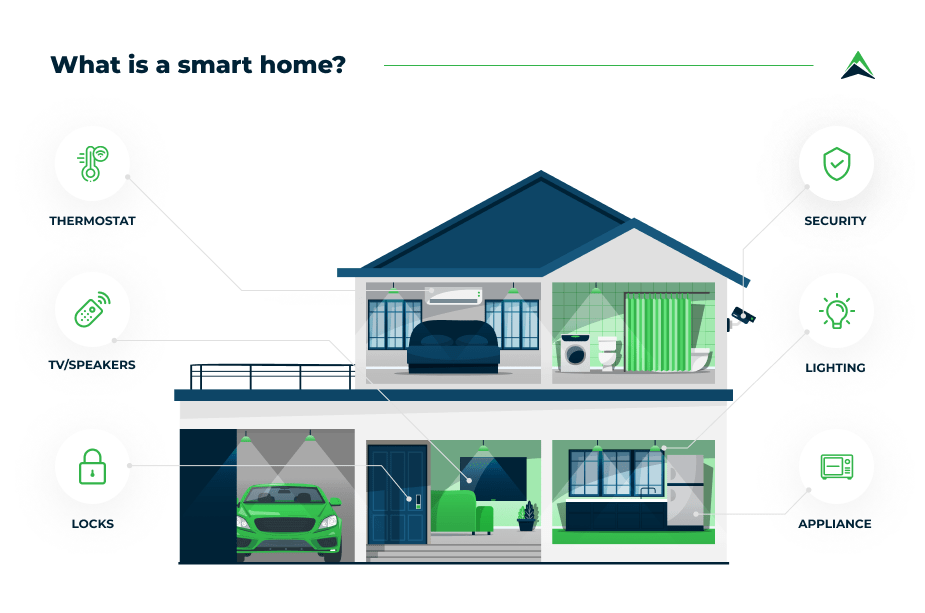
The process generally works as follows:
- Smart devices connect to a home network.
- Sensors gather data from the environment.
- Software analyzes information and executes actions.
- Users control devices through mobile apps or voice assistants.
- Devices communicate with each other to automate routines.
For instance, a smart thermostat may detect that nobody is home and automatically lower the temperature to save energy. When the homeowner returns, the system adjusts the climate to a comfortable setting.
The effectiveness of smart home technology depends on reliable internet connectivity and compatible devices. As artificial intelligence advances, smart homes are becoming more intuitive, learning user preferences and adapting automatically to daily routines.
Key Components of a Smart Home
Smart Lighting
Smart lighting systems allow homeowners to control brightness, color, and schedules remotely. Lights can be programmed to switch on at sunset, dim during movie nights, or turn off automatically when rooms are unoccupied.
Beyond convenience, smart lighting helps reduce energy consumption. Motion sensors and scheduling features ensure lights are only used when needed, contributing to lower electricity bills.
Smart Security Systems
Security is one of the most popular reasons people invest in smart home technology. Smart security devices include cameras, doorbell cameras, motion detectors, smart locks, and alarm systems.
These devices provide real-time monitoring and alerts. Homeowners can view live footage, lock doors remotely, and receive notifications whenever unusual activity is detected. This enhanced level of control improves peace of mind whether residents are at home or away.
Smart Climate Control
Smart thermostats and climate-control systems help maintain comfortable indoor temperatures while minimizing energy usage. These devices learn user preferences and adjust settings automatically.
For example, a thermostat can lower heating or cooling levels when the house is empty and restore preferred temperatures before occupants return.
Benefits of a Smart Home
The growing popularity of smart homes can be attributed to numerous advantages that enhance everyday living.
Improved Convenience
One of the biggest benefits is convenience. Routine tasks that once required manual effort can now be automated. Voice commands, smartphone apps, and scheduled routines simplify home management.
Enhanced Security
Smart security systems provide greater awareness and control over home safety. Real-time alerts, video monitoring, and remote access help homeowners respond quickly to potential threats.
Energy Efficiency
Many smart devices are designed to reduce energy waste. Automated lighting, smart thermostats, and energy-monitoring systems contribute to lower utility bills and a reduced environmental footprint.
Greater Accessibility
Smart home technology can improve accessibility for elderly individuals and people with disabilities. Voice-controlled devices and automated systems make daily activities easier and more manageable.
Personalized Living Experience
Smart homes adapt to individual preferences. Whether adjusting lighting scenes, playing favorite music, or managing room temperatures, customization creates a more comfortable environment.
Popular Smart Home Devices
The smart home market offers a wide range of products designed to improve various aspects of daily life.
| Device Category | Purpose | Main Benefit |
|---|---|---|
| Smart Speakers | Voice control and automation | Hands-free convenience |
| Smart Thermostats | Temperature management | Energy savings |
| Smart Lights | Automated lighting control | Efficiency and ambiance |
| Smart Locks | Remote door access | Enhanced security |
| Smart Cameras | Video surveillance | Real-time monitoring |
| Smart Plugs | Device automation | Easy energy management |
| Smart Appliances | Connected household tasks | Increased convenience |
| Smart Sensors | Environmental monitoring | Better automation |
These devices can function independently or work together as part of an integrated smart home ecosystem.
The Role of Artificial Intelligence in Smart Homes
Artificial intelligence is becoming a major driver of smart home innovation. AI enables systems to learn user behavior, predict needs, and make automated decisions.

For example, an AI-powered smart home may learn when residents typically wake up and automatically adjust lighting, temperature, and music settings each morning. Over time, the system becomes more efficient and personalized.
Machine learning algorithms also improve security by identifying unusual patterns and distinguishing between normal and suspicious activity. As AI capabilities continue to expand, smart homes will become even more intelligent and responsive.
Understanding what is a smart home today also means understanding the role AI plays in creating a seamless and adaptive living environment.
Challenges and Limitations of Smart Homes
Despite their many advantages, smart homes are not without challenges.
Privacy Concerns
Connected devices collect significant amounts of data. Some homeowners worry about how this information is stored, shared, and protected.
Cybersecurity Risks
Internet-connected devices can become targets for hackers if not properly secured. Strong passwords, software updates, and secure networks are essential for protecting smart home systems.
Initial Investment
Although prices have become more affordable, building a comprehensive smart home can still require a substantial upfront investment.
Compatibility Issues
Different brands and platforms may not always work seamlessly together. Choosing compatible devices helps ensure a smoother user experience.
Being aware of these challenges allows homeowners to make informed decisions when adopting smart technology.
How to Build a Smart Home
Creating a smart home does not require transforming an entire house at once. Many homeowners begin with a few essential devices and expand gradually.
Step 1: Define Your Goals
Determine what you want to achieve. Common goals include improving security, saving energy, increasing convenience, or enhancing entertainment.
Step 2: Choose a Smart Home Platform
Select a platform that supports the devices you plan to use. Consistency improves compatibility and simplifies management.
Step 3: Start with Core Devices
Many homeowners begin with:
- Smart speakers
- Smart lighting
- Smart thermostats
- Smart security cameras
- Smart plugs
Step 4: Create Automation Routines
Automation allows devices to work together efficiently. For example, lights can turn on automatically when motion is detected, or thermostats can adjust based on occupancy.
Step 5: Expand Gradually
As needs evolve, additional devices and features can be added to create a fully connected home environment.
Future Trends in Smart Home Technology
The future of smart homes is expected to be shaped by advancements in artificial intelligence, connectivity, and sustainability.
Emerging technologies will likely offer:
- More advanced voice assistants
- Predictive automation
- Improved energy management
- Greater device compatibility
- Enhanced cybersecurity measures
- Integration with renewable energy systems
Smart homes may eventually anticipate homeowner needs before commands are even given. Connected ecosystems will become increasingly seamless, creating highly personalized living experiences.
As technology continues to evolve, the question of what is a smart home will encompass even more sophisticated features and capabilities than those available today.
Why Smart Homes Are Becoming More Popular
Several factors contribute to the growing adoption of smart home technology. Increased internet access, lower device costs, and rising consumer awareness have made smart homes more accessible than ever.
Additionally, modern lifestyles often demand greater convenience and efficiency. Smart devices help homeowners save time, reduce energy costs, and maintain better control over their living environments.
The integration of smart technology into everyday products means consumers are increasingly encountering connected devices in stores, online marketplaces, and new home developments. This widespread availability continues to drive interest and adoption.
As more people experience the benefits firsthand, smart homes are expected to become a standard feature in residential living rather than a luxury option.
Conclusion
Understanding what is a smart home is essential in today’s technology-driven world. A smart home uses internet-connected devices and automation to improve convenience, security, energy efficiency, and overall quality of life. From smart lighting and climate control to advanced security systems and AI-powered automation, these technologies are reshaping how people interact with their homes.